Jump to content

A giffertastic Rover 45 - engine removal and autopsy


Recommended Posts

Posted

If it's gone between water jacket and two pots then it could have hydrolocked itself on one cylinder. Pulled the plugs to look or see if that changes the behavior?

If it's just rusted the rings, free it up, head gasket, reassemble and enjoy.

It's just doing the grumpy things because you've pressed it into service that is never had to do before. Nothing's had a chance to bed in, get properly to temperature etc. Once it's broken everything it wants to break and it has had a few things replaced it'll be reliable.


Phil

  • Like 1
Posted

Rust collector will buy it , and stick another engine in and sell it to me really cheap. :-D

Drill a flat  bar of steel , and bolt it down on the deck so the liners can't move .. then rock it .


  • Like 1
  • Haha 1
Posted
5 hours ago, PhilA said:

If it's gone between water jacket and two pots then it could have hydrolocked itself on one cylinder. Pulled the plugs to look or see if that changes the behavior?

If it's just rusted the rings, free it up, head gasket, reassemble and enjoy.

It's just doing the grumpy things because you've pressed it into service that is never had to do before. Nothing's had a chance to bed in, get properly to temperature etc. Once it's broken everything it wants to break and it has had a few things replaced it'll be reliable.


Phil

Thanks for the suggestion, there's no difference with the head off so it's not hydrolocked. If I go much further I'm going to have to clamp the liners down. I'm going to check the liner heights next, if one has dropped then i don't think it's worth going further. If the heights are ok, I may clamp them and have a go at seeing if it's stuck piston rings. I am definitely more suspect it's bottom end bearings though

Posted
2 hours ago, RoverFolkUs said:

Thanks for the suggestion, there's no difference with the head off so it's not hydrolocked. If I go much further I'm going to have to clamp the liners down. I'm going to check the liner heights next, if one has dropped then i don't think it's worth going further. If the heights are ok, I may clamp them and have a go at seeing if it's stuck piston rings. I am definitely more suspect it's bottom end bearings though

Weird that it failed while stationary. You'd expect a bottom end to 'go' during use. 

Or, an engine that's sat for ages might seize... Neither relevant to your predicament. 

I feel for you because back in your garage mechanic time you'd have had this apart and fixed by now. 

This is how the other half live - without two posters and air tools! 

  • Like 1
  • Haha 1
Posted
21 minutes ago, grogee said:

Weird that it failed while stationary. You'd expect a bottom end to 'go' during use. 

Or, an engine that's sat for ages might seize... Neither relevant to your predicament. 

I feel for you because back in your garage mechanic time you'd have had this apart and fixed by now. 

This is how the other half live - without two posters and air tools! 

You've hit the nail on the head there! 

Posted

I went out to a fwd Transit once that had been standing for a couple of weeks and wouldn't turn over. The customer had changed the battery and the starter motor, even cleaned the engine and body earth's but no joy.

Long story short the alternator had seized and its well tensioned multi rib drive belt was dong a great job of convincing us the engine had locked up.

Actually I can also recall a Proton Satria do the same thing after being sat in a wet carpark for a couple of weeks.

Obviously you've pulled the Rovers drive belt off to remove the cambelt covers.

Posted

Ive also had a r5gtt engine seize similar after hg fail and layup, rings had rusted to the liners as water in the cylinders. Broke it free with a tow /clutch dump as engine was still together, not the best the rings seemed to survive.

Bang a mix of atf/acetone in the cylinders and clamp the liners, prob go with a bit of a soak and bar on the pulley.

Posted
4 minutes ago, Brigsy said:

Ive also had a r5gtt engine seize similar after hg fail and layup, rings had rusted to the liners as water in the cylinders. Broke it free with a tow /clutch dump as engine was still together, not the best the rings seemed to survive.

Bang a mix of atf/acetone in the cylinders and clamp the liners, prob go with a bit of a soak and bar on the pulley.

The thing is, it wasn't burning coolant or pressurising the cooling system. 

There was a scum line of oil in the header tank, although when I drained the system down it was all very clean.

Oil pressure is higher than coolant, so theoretically more oil should have gone into the coolant than vice-versa

However, when cooling down, coolant would be pressurised and may have entered the oil. I know the water pump was leaking, so based on the quantity I've been topping up I can't imagine the oil would contain much, if any, coolant. 

I'm not saying you're all wrong. It just seems very mysterious. I will happily try freeing off the pistons with the liners clamped 

Posted

Odd one for sure. Sometimes in the right conditions with inlet and exhaust valves open, moisture gets in the cylinders and locks them up regardless of h/g condition.

I might be wrong but dont some of the rovers have inlet gaskets leak coolant into the inlet relating to hg failure?

  • Like 1
Posted

I've poured some penetrating oil into the bores (it's good stuff, tried and tested) as I don't have any ATF or Acetone to hand at the moment. Have given the pistons a few gentle taps with a copper hammer via a block of wood, no joy so far but I'll leave it overnight and try again tomorrow. 

I'm going to have another look tomorrow. I might see if I can get the block out, off the gearbox. If I can get the block out of the car onto an engine stand I might have a better chance of doing an autopsy on it. Even if I find terminal damage, I can rest easy and not wonder "what if it was only something simple"

The more I sit and think about it, the more I can't stand the idea of giving up on it 😅

Posted
8 hours ago, Brigsy said:

Odd one for sure. Sometimes in the right conditions with inlet and exhaust valves open, moisture gets in the cylinders and locks them up regardless of h/g condition.

I might be wrong but dont some of the rovers have inlet gaskets leak coolant into the inlet relating to hg failure?

I did the inlet manifold gasket back in December. No signs of coolant intrusion into the cylinders. Good idea, but not the issue in this case

Posted
7 hours ago, RoverFolkUs said:

The more I sit and think about it, the more I can't stand the idea of giving up on it 😅

You're going to have to dismantle it anyway to work out why it has stuck, otherwise it'll keep you awake at night! Once you've gone that far you may as well fix it, if it isn't FUBAR. 👀

Posted

Erm. No caption needed really 🙃 - the oil is coming out like Jelly and the sump is full of coolant...

PXL_20260605_175216584.jpg.e5231a682cb15d82da5b6c31ef8cac37.jpg

  • RoverFolkUs changed the title to A giffertastic Rover 45 - engine removal and autopsy
Posted

So, what happened? 

I left penetrating oil in the bores overnight and tried to tap the pistons down with a block of wood. No joy. 

I then took the cams out of the head to shut the valves, temporarily bolted the head back down and then tried, with an assistant, to bump it in gear a few times. Again, no joy. I didn't try too hard because I didn't want to risk snapping a conrod if it was a stuck piston, but on every attempt it stopped the car dead in its tracks. 

I was then faced with a few options. I had now determined that I have nothing to lose with this bottom end, there's no way of freeing it up in situ so I could either: 

A) Strip it down, autopsy it and find out what the hell has happened, and if it's terminal. 

B) Fit a replacement complete engine, of unknown quality, risking back to square one of OMGHGF

C) Give up and scrap it. 

Finding a replacement K-Series engine actually proved harder than expected. I didn't fancy fitting a 1.4 or 1.8 because that's just a headache if you're doing things properly with the DVLA etc. I got offered a 1.6 which was "reported to be losing coolant when removed from the car" and he wanted £200 collected for that... 

Giving up and scrapping it was considered, but I've had no serious interest in the shell of the car as a donor, or parts from it. I couldn't bring myself to just scrap it as it is. 

Therefore: 

I realised I was probably spending more time dwelling on things than the time it would take for option A) 

With the head already off the car, I removed all the ancillaries. Fortunately the A/C compressor and power steering pump can all be unbolted from the engine without disconnecting anything! 

I put a couple of axle stands under the gearbox, unbolted all the bell housing bolts and then wiggled the block free from the gearbox, using a trolley jack underneath for support. I then lowered the jack, and there was just(!) enough clearance under the car for me to drag it out. 

I then set about stripping the block down. I wasn't really able to drain the sump due to how the oil has emulsified so this was a messy process. A quick run to Tesco to get some plastic boxes was in order! 

PXL_20260605_192604192.jpg.4c90101cc6b118f54b78cd23d7a3a2a6.jpg

I didn't get many photos along the way of stripping it down, but it consists of - remove sump, remove oil pickup, remove oil feed rail, remove oil pump, remove crankshaft carrier ladder. 

PXL_20260605_190739202.jpg.62b727c4d284d97cfeee3171d2e2e549.jpg

PXL_20260605_190741044_MP.jpg.6414c3d789eae1fafcdf24628506e023.jpg

With the crankshaft carrier ladder removed, it still would not turn. This helped isolate the main bearings as being the cause of the problem. I then removed each big end bearing cap, one at a time, to see if I could identify which one was causing it. Once I got to cylinder 1, I tapped the piston away from the crankshaft, towards TDC, and the crankshaft freed off!

The big end bearings have all suffered. 

PXL_20260605_192937825.jpg.fa644386413c84741d625a2d60589b71.jpg

PXL_20260605_203052752.jpg.bd344ee00836c4893b87059ccd80c189.jpg

PXL_20260605_203056857_MP.jpg.8802734fb54ec535dfce651abd13978a.jpg

PXL_20260605_203058522_MP.jpg.b9386c2ff401533454c5af2fb7440986.jpg

PXL_20260605_203100189.jpg.467b443160d540f5a23397497d29e8a6.jpg

PXL_20260605_203103870.jpg.68a347b9b289a5360cc03ee1d99f834b.jpg

PXL_20260605_203130282_MP.jpg.45770a72cf2a00c45b7f1d7f82e140d7.jpg

PXL_20260605_203137010_MP.jpg.ca830c8b053f9ad030b10dc93bb93044.jpg

PXL_20260605_203230363_MP.jpg.bdb54405e087a306642f5586af5c306b.jpg

PXL_20260605_203243454.jpg.61ebaeee85bdbe8da25a2958e4d288be.jpg

Bear in mind that the above photos were taken in dwindling daylight, and the later ones with a torch for lighting so may appear worse. 

The brown residue on the bearings is what was binding everything up - I can assume the coolant contamination in the oil has effectively baked the oil onto the bearings due to insufficient lubrication. 

I need to now clean everything in a parts washer and properly assess the damage. So far, I haven't seen anything that I'd deem terminal. The crankshaft itself appears to have no scoring. But I will endeavour to check clearances and decide if it's worth rebuilding.

PXL_20260605_204336755.jpg.a59e1d3aefbe625ae27cef2b01eaf0b9.jpg

PXL_20260605_204345213.jpg.6aafa82bd1da152ecaeb8bca6254fcf6.jpg

PXL_20260605_204021698_MP.jpg.732e31bf7ff4871747274459b66cfb6f.jpg

No signs of bore scoring - the cross hatching is still visible. 

Miraculously, everything up top has survived and there's none of the oil sludge, aside from the white emulsification under the cam cover. The oil was the exact consistency you'd expect. 

So, why has this happened? 

I initially suspected OMGHGF due to the oil residue in the coolant tank. However, this failure is clearly more sinister as the sump is full of coolant. Theoretically, oil pressure should mean oil goes into the coolant rather than the other way around, if it was OMGHGF. My suspicion was aroused when I drained the radiator and found the coolant was perfectly clean, meaning there was less oil in the cooling system than I expected. (Refer back to my MG ZR which was much, much worse!)

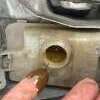
Therefore, my suspicion is that the wet liners have dropped at some point, and therefore the seal has broken and coolant has been leaking past the liners into the crankcase. This might go some way to explain the coolant loss in this engine, but the leaking water pump was clearly a red herring! 

PXL_20260605_191046714.jpg.f3c3cdcf0b57aa40d3631ac4e6a63ab9.jpg

With the liners sitting flush, instead of proud, this does mean a rebuild would involve, at the very least: 

- Remove liners, add shims to increase height and reseal

- Check main and big end bearing clearances, replace bearings as required 

- Fit upgraded oil rail. Not a necessity, but this is a known K-Series upgrade to increase overall strength and makes sense to do while it's stripped down to this extent

- Replace various gaskets and reseal various surfaces 

- With the engine out, it made sense to check the clutch. It was biting towards the top of the pedal and tended to judder - as I expected, I've found it's worn and nearly at the end of its life so it would be getting a new clutch kit as well. 

Overall, it doesn't really feel "worth it" from an economic point of view. But I am inclined to fix it as long as costs don't spiral once I determine the extent of the damage. 

I can only hope there isn't some underlying weakness in the block which has caused this failure in the first place. 

I've already spent £150 on the head gasket kit, cambelt and water pump. I'm provisionally expecting another £250 or so for the extra parts needs to rebuild. 

Rover 45s have a bit of a ceiling value at the moment and I was thinking of moving it on anyway before it failed. If I was keeping it I wouldn't have hesitated to fix it, but I'm conscious of economic viability.

Thoughts on a postcard invited!

  • Like 9
Posted

The autoshite solution is clearly to fix it.  'Economic viability?'  That point was passed a long time ago.

Is it possible to get any useful material for your teaching out of this?

Having got to where you are, I'd be inclined to finish the job.  At least now you're not on the tools all day long, it will feel less like a busman's holiday.  And be great material for all of us to read.

From my own experience of these cars, I'd get changing the gearbox oil in the budget too.

It does all show that these can be a bit frail.  There's many an engine from other manufacturers that wouldn't have done all this.  

Posted
14 minutes ago, RoverFolkUs said:

I'm conscious of economic viability.

Let's face it, nobody expects to receive sensible financial advice on Autoshite. What we excel at is man maths and mindless optimism.

I therefore say : DO IT !

  • Like 2
  • Agree 1
Posted

When the HG went on my Saab, the first warning I had was a tiny bit of oil in the header tank and the occasional bubble.

This rapidly progressed a few days later to loss of a cylinder and biblical amounts of steam out the exhaust.

Levels were fine when parked up.

When I came back the following day the entire contents of the cooling system bar about a pint was in the sump.  So that can happen!  No wet liners there as far as I'm aware.

  • Like 1
Posted
13 minutes ago, lisbon_road said:

The autoshite solution is clearly to fix it.  'Economic viability?'  That point was passed a long time ago.

Is it possible to get any useful material for your teaching out of this?

Having got to where you are, I'd be inclined to finish the job.  At least now you're not on the tools all day long, it will feel less like a busman's holiday.  And be great material for all of us to read.

From my own experience of these cars, I'd get changing the gearbox oil in the budget too.

It does all show that these can be a bit frail.  There's many an engine from other manufacturers that wouldn't have done all this.  

Yeah I did think of the teaching value but it's nearing the end of term now and I can't put it on hold until September. I think instead I'll do some filming of the checks and rebuild incase it's useful later down the line :) - I've already done some filming of the teardown (before I realised the gravity of the issue) and I may put it online. Youtube has never been my thing though, but it might be useful for someone 

I *think* this is an IB5 gearbox rather than the more troublesome earlier R65 (I need to check and confirm in order to get the clutch). Does your advice still apply? 

Yeah absolutely it does expose the K-series weakness. For the average motorist who doesn't open the bonnet between services you can see how so many of these died a death. It feels like there's a lottery with K-Series engines anyway. It's well documented that many were built with poor tolerances and I've heard of them leaving the factory with low liners, which may go some way to explain how some manage high mileage with minimal drama and some failed very early on. 

It also shows how low mileage cars aren't always a good thing - based on the sludge in the sump I'm doubtful of it's yearly oil changes, I'm not sure all of this can be put down to the coolant contamination. 

  • Like 1
Posted
5 minutes ago, RoverFolkUs said:

I *think* this is an IB5 gearbox rather than the more troublesome earlier R65 (I need to check and confirm in order to get the clutch). Does your advice still apply? 

Well my experience was only of the R65, on which it is also very easy to change the oil as it has a convenient drain plug.  Mind after this long, any gearbox should be pleased to get fresh oil and how many ever get changed?

It was a passing comment, I'd never want to give you 'advice' as you've so much more experience than me or indeed many others on here!

Your comments about K series being all different are interesting though.  The one I've maintained from time to time has really been pretty good, with now 150K miles and not using oil, having just had a head gasket and far fewer oil changes than if it had been mine.  

Sounds like you're going to do it, look forward to reading the updates.

  • Like 1
Posted

You could set yourself a challenge to repair from this point as cheaply as possible - minimise spend on parts and consumables. 

Bearings aren't that expensive but all the bits add up I suppose. Do you still get trade prices for parts? 

I remember doing big ends on my Celica, it was in situ though and I lucked out on buying the right size shells. Shoelace+wet n dry+WD40 to polish the big ends. 

I used that plasticine strip stuff that crushes to a width to tell you the clearance, recommended. 

  • Like 1
Posted
23 minutes ago, lisbon_road said:

Well my experience was only of the R65, on which it is also very easy to change the oil as it has a convenient drain plug.  Mind after this long, any gearbox should be pleased to get fresh oil and how many ever get changed?

It was a passing comment, I'd never want to give you 'advice' as you've so much more experience than me or indeed many others on here!

Your comments about K series being all different are interesting though.  The one I've maintained from time to time has really been pretty good, with now 150K miles and not using oil, having just had a head gasket and far fewer oil changes than if it had been mine.  

Sounds like you're going to do it, look forward to reading the updates.

I don't know everything, and always welcome comments and different perspectives 😅

It's a good idea to change the gearbox oil when doing the clutch anyway

I think I will do it as long as I don't find the block, crank or anything else require expensive machine work

5 minutes ago, grogee said:

You could set yourself a challenge to repair from this point as cheaply as possible - minimise spend on parts and consumables. 

Bearings aren't that expensive but all the bits add up I suppose. Do you still get trade prices for parts? 

I remember doing big ends on my Celica, it was in situ though and I lucked out on buying the right size shells. Shoelace+wet n dry+WD40 to polish the big ends. 

I used that plasticine strip stuff that crushes to a width to tell you the clearance, recommended. 

My mind is torn between a budget rebuild Vs a more belts and braces approach. My thought process always leans towards longevity but that's because I've always worked on other people's cars professionally. When it comes to my own, if I'm not ensuring longevity my instinct tells me I'm being negligent 😅

I have thought of cleaning all the residue off the bearings and giving everything a polish. The drawback there is that on a K-Series you need to remove the head to get to the big ends, as the head bolts go into the oil rail which impedes access to the bottom end. Therefore if I did cheap out and end up with a bottom end noise I've got to start again rather than just whip the sump back off. 

  • Like 2
Posted
51 minutes ago, RoverFolkUs said:

It also shows how low mileage cars aren't always a good thing - based on the sludge in the sump I'm doubtful of it's yearly oil changes, I'm not sure all of this can be put down to the coolant contamination. 

Yes, I can certainly see a situation where the owner took it down to the garage for an annual oil change, paid them for parts and labour and then brought it home again - but was any oil actually changed? 

🤔

  • Like 1
  • Sad 1
Posted
15 minutes ago, RoverFolkUs said:

I don't know everything, and always welcome comments and different perspectives 😅

It's a good idea to change the gearbox oil when doing the clutch anyway

I think I will do it as long as I don't find the block, crank or anything else require expensive machine work

My mind is torn between a budget rebuild Vs a more belts and braces approach. My thought process always leans towards longevity but that's because I've always worked on other people's cars professionally. When it comes to my own, if I'm not ensuring longevity my instinct tells me I'm being negligent 😅

I have thought of cleaning all the residue off the bearings and giving everything a polish. The drawback there is that on a K-Series you need to remove the head to get to the big ends, as the head bolts go into the oil rail which impedes access to the bottom end. Therefore if I did cheap out and end up with a bottom end noise I've got to start again rather than just whip the sump back off. 

If you always welcome perspective, then I suggest, clean and polish bearings, measure everything and make a decision based on their condition and what you find.  Certainly from the photos the crankshaft looks good, as to say I've assembled worse and they've run quietly for many miles.  

Only reason to immediately replace them is to save time.  

  • Like 1
Posted
15 minutes ago, Datsuncog said:

Yes, I can certainly see a situation where the owner took it down to the garage for an annual oil change, paid them for parts and labour and then brought it home again - but was any oil actually changed? 

🤔

Exactly. It was going to a main dealer (MG) as well up until 2023

  • Sad 1
Posted
13 minutes ago, lisbon_road said:

If you always welcome perspective, then I suggest, clean and polish bearings, measure everything and make a decision based on their condition and what you find.  Certainly from the photos the crankshaft looks good, as to say I've assembled worse and they've run quietly for many miles.  

Only reason to immediately replace them is to save time.  

I will endeavour to keep the costs down, if the bearing clearances are ok, and there's no scoring then I'd probably be happy enough polishing everything and re-using. It's helpful to hear perspectives and anecdotes from what people have got away with working on their own cars. For me it's very easy to say "just replace it" when I've always been focused on doing things by the book

  • Like 1

Create an account or sign in to comment

You need to be a member in order to leave a comment

Create an account

Sign up for a new account in our community. It's easy!

Register a new account

Sign in

Already have an account? Sign in here.

Sign In Now
×
×
  • Create New...